No Apostate Left Behind
My Story as a Queer Closeted Ex-Muslim in Pakistan: Apostate Dawood | No Apostate Left Behind
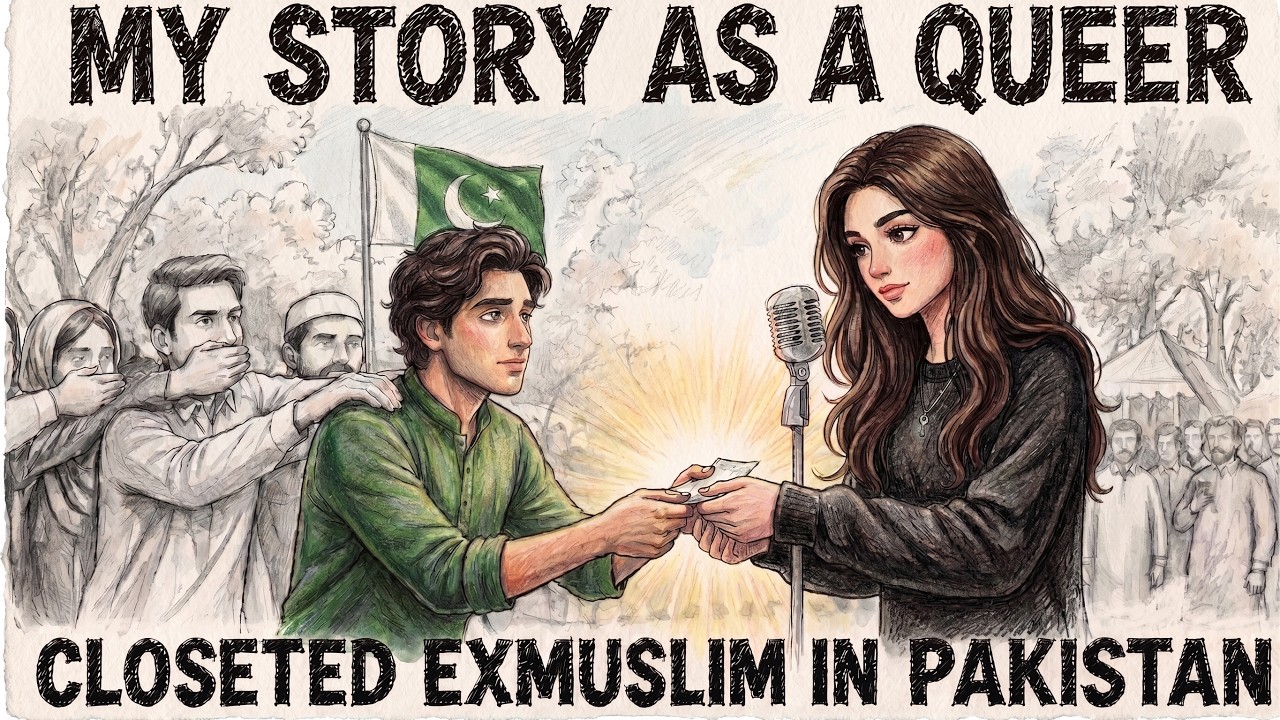
Summary:
The queer Pakistani ex-Muslim describes growing up in a religious Ahmadiyya Muslim family in Pakistan while facing persecution because Ahmadis are legally and socially marginalized. Their family kept them highly sheltered, which affected their social development and critical-thinking skills.
They initially practiced Islam devoutly, but began questioning Ahmadiyya beliefs in sixth grade, especially the authority and near-infallibility attributed to the caliph. Further doubts emerged over gender inequality, polygamy, religious punishments, accounts concerning Aisha, slavery and concubinage, scientific claims, and violence within religious teachings.
The queer Pakistani ex-Muslim also recounts discovering their queer identity during adolescence. Finding religious condemnation of homosexuality contributed to depression, though they initially tried to reconcile their identity with Islam by believing that same-sex attraction was only wrong if acted upon.
They secretly explored Sunni Islam before eventually identifying more generally as Muslim and then gradually becoming an ex-Muslim. Online ex-Muslim communities exposed them to religious criticisms and hadiths they had not previously encountered.
The queer Pakistani ex-Muslim also describes serious trauma: after someone at school discovered he was Ahmadi, a teacher allegedly attacked and attempted to assault them. The experience caused PTSD. Therapy was unsuccessful because the therapist framed the abuse through a religious or homophobic lens rather than focusing on the assault of a minor.
By the end, the queer Pakistani ex-Muslim says they still concealed their beliefs for safety. Their parents monitored their prayers, communications, and movements; at one point, they locked the queer Pakistani ex-Muslim in a room without food or water. Despite feeling hurt, he also recognizes that their parents were shaped by religious indoctrination and had experienced persecution themselves.
The closing message is for ex-Muslims and others living in unsafe environments: they are not alone, their experiences are valid, and people should continue speaking in support of one another while prioritizing personal safety.
Chapters
- Introduction and anonymous narration
- Growing up queer and ex-Muslim in Pakistan
- Life in an Ahmadiyya Muslim family
- Sheltered childhood and early religious devotion
- First doubts about the Ahmadiyya caliphate
- Religious pressure and the idea of a caliphate
- Questions about gender and marriage
- Discovering same-sex attraction
- Depression and conflict over sexuality
- Secretly converting to Sunni Islam
- Growing doubts about Islamic teachings
- Discovering teachings about concubinage
- Finding the ex-Muslim community online
- Exposure of the speaker’s Ahmadi identity
- Assault and lasting PTSD
- A harmful experience with therapy
- Questioning religious teachings about wife-beating
- Becoming an ex-Muslim while remaining closeted
- Double standards in defending religious figures
- Leaving Islam emotionally and intellectually
- Family conflict after asking religious questions
- Detention and surveillance at home
- Why the speaker still feels sympathy for family
- Supporting fellow ex-Muslims
- Why many people remain Muslim
- Staying silent for personal safety
- A message to people who feel alone
- Speaking out despite oppression
- Final message from the apostates
More from No Apostate Left Behind
See the series-
 13:24
My Dad Threatened to Kill Me Over Leaving Islam and My Sexuality | Apostate Mariem's story
-
 21:49
I Left Islam, Fled My Country, And Asked For Asylum | Ex-Muslim Story
-
 14:40
My Story as a Semi-Closeted Ex-Muslim Girl | Apostate Aisha
-
 11:15
I Almost Joined ISIS. Then I Left Islam Entirely | Ex-Muslim Story
-
 22:35
Emotional Story of Closeted Ex-Muslim in the West | No Apostate Left Behind
-
 12:39
My Story as a Closeted Ex-Muslim Girl: Desert Emerald | No Apostate Left Behind