Desert Emerald
Which Version of Islam is Right? Ex-Muslim answers | Desert Emerald
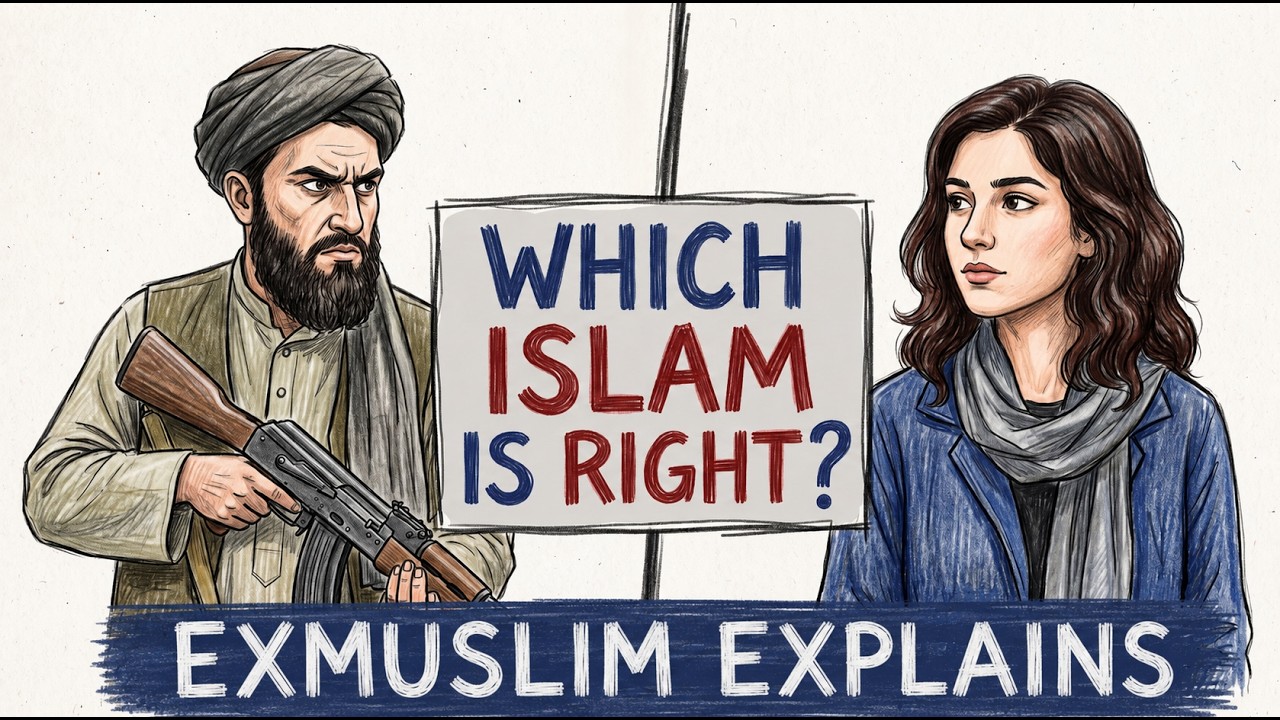
Why Are There So Many Versions of Islam? | Scriptural Realities & History Explained
We are often presented with two entirely opposing narratives about Islam: a timeless religion of peace and moral order, or a battlefield of violent extremism and political power struggles. But why do both stories feel accurate to the people telling them, and why do so many different interpretations exist today?
In this video, we dive deep into the gaps between popular narratives and historical realities. From early political conflicts among the Sahaba to the medieval formation of legal systems and the weaponization of theology by rulers, we examine how classical texts, state power, and institutional double standards have shaped modern understanding.
We also explore the modern dilemma facing Islamic institutions, the impact of the digital age on religious authority, and the real-world consequences these theological friction points have on reformists, everyday believers, and the ex-Muslim community.
The main arguments are:
Extremist groups are drawing on certain classical legal interpretations and historical precedents rather than inventing an entirely new ideology.
Early Islamic and later Muslim history was involving frequent political conflict, violence, dynastic struggle, and the use of religious authority to justify power.
Rulers shaped or weaponized theology through concepts such as takfir, state-sponsored legal rulings, and the suppression of opposing scholars.
Religious scholars sometimes depended on rulers for funding and institutional authority, creating incentives for compliance.
Modern scholars face a dilemma: openly defending classical rulings can conflict with modern human-rights standards, while reforming them may conflict with traditional ideas such as ijma, scholarly consensus.
Some institutions use different messages for international audiences and domestic religious education.
The internet has weakened traditional scholarly control by allowing ordinary people to access classical texts directly, sometimes creating confusion or making extremist interpretations easier to encounter.
The conclusion, there are three broad groups: fundamentalists, apostates, and believers caught between traditional texts and modern values. Some interpretations can endanger ex-Muslims and we should be confronting these issues.
Chapters
- Two Competing Stories About Islam
- Why Are There So Many Interpretations?
- Why Fundamentalist Interpretations Reappear
- Classical Texts and Extremist Claims
- Conflict After Muhammad’s Death
- Political Violence Throughout Islamic History
- How History Is Used by Extremists
- Rulers and the Weaponization of Theology
- The Abbasid Mihna and State-Controlled Theology
- Ottoman Law, Expansion, and Political Fatwas
- The Story of Omar and Religious Authority
- When Authority Overrides Legal Consistency
- The Relationship Between Rulers and Scholars
- Ijma and the Modern Scholarly Dilemma
- Classical Law Versus Modern Human Rights
- Dual Messaging for Different Audiences
- Disagreement Between Islamic Legal Schools
- The Internet Breaks the Scholarly Monopoly
- Three Responses: Fundamentalists, Apostates, and the Middle
- Why This Matters to Ex-Muslims
- Can the Problem Be Fixed?